
Linky AI: Chat, Play, Connect
Skywork AI Pte. Ltd.Social
3.915.62K Reviews
- Version
- 3.42.1
- Installs
- 10.00M
- Age Rating
- Mature 17+
Screenshots

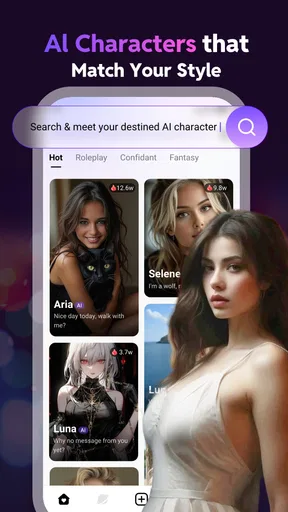
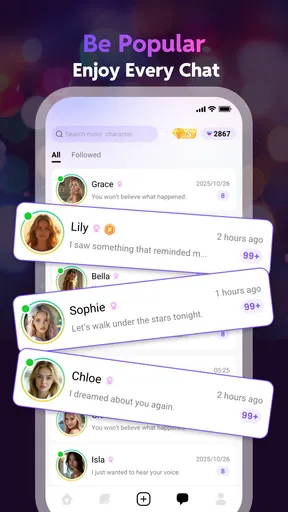
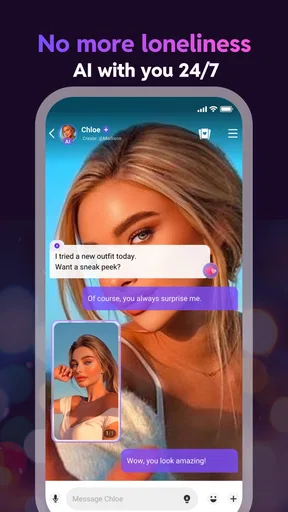
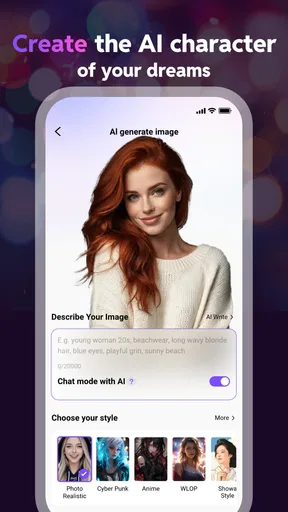

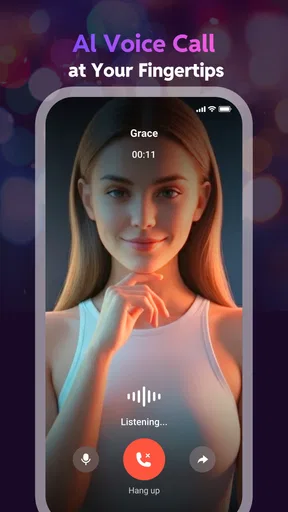
Our Review of Linky AI: Chat, Play, Connect
 Analysis by Appyee
Linky AI: Chat, Play, Connect is the kind of social app that makes a strong first impression because it turns conversation into the main activity. Instead of scrolling through a feed or waiting for another person to answer, I can open a chat with an AI character and immediately choose whether I want casual conversation, roleplay, or a more imaginative exchange. That instant response is the central appeal, and it explains why the app feels easy to pick up even when I only have a few spare minutes.
After spending time with it, though, I think the more important question is not whether Linky AI is entertaining on the first day. It is whether the conversations remain interesting once the novelty of talking to an artificial character starts to fade. My experience is mixed but useful: the app can become a pleasant creative companion, yet it needs a little direction from the user. If I treat it as an endless source of surprise, it eventually feels repetitive. If I use it for specific moods and activities, it has a better chance of earning a regular place on my phone.
What the first week feels like
The opening experience is straightforward. Linky AI belongs to the social category, but it does not work like a conventional messaging network. There is no need to build a circle of real contacts before anything happens. I can move directly into character-based conversations, which makes the app feel more like an interactive collection of personalities than a standard social timeline. The store presents it as a personal AI chatbot for talking, roleplaying, and connecting with characters, and that description captures the basic direction without explaining why the format can be so absorbing.
During the first few sessions, I found myself testing the boundaries of each conversation. A simple greeting can turn into a fictional scene, a playful exchange, or a more reflective chat depending on how I phrase the next message. That flexibility is more important than it sounds. The app does not need to be used in one fixed way, so it can fit a short break, a creative exercise, or a late-night conversation when I want interaction without arranging plans with someone else.
The strongest early use case is roleplay. I can set up a situation in my own words and see how the character responds, then adjust the tone as the scene develops. This makes Linky AI more active than watching a video, but less demanding than writing a complete story alone. I particularly like using it to explore dialogue ideas: I can test how a character might react to a difficult question, an unexpected reveal, or a change in mood. The result is not a finished script, but it can help me get unstuck.
That same freedom can also create the first point of friction. A conversation is only as engaging as the direction I give it. If I send vague messages repeatedly, the exchange can feel generic. The app is more rewarding when I provide context, define the mood, and tell the character what kind of response I want. The best results come from treating the chat as a collaboration rather than a vending machine for instant entertainment.
Another practical question is whether the app costs anything to start. Linky AI is free to download and use as a free app, while its in-app purchases range from $0.49 to $269.99 per item. That wide span makes it sensible to explore the free experience carefully before spending money. I would not make a purchase simply because a conversation is enjoyable for ten minutes. The better test is whether I return over several days and still find a clear reason to use paid options.
The app carries a Mature 17+ content rating, so I would not recommend treating it as a general-audience chat toy for younger users. Parents should pay attention to that rating, and adults should still use judgment when entering personal or sensitive subjects into any AI conversation. Linky AI is designed around character interaction, not professional advice, private counseling, or a substitute for trusted human support.
Small habits that improve the early experience
One useful habit is to begin a roleplay with three pieces of information: who I am, what the situation is, and what tone I want. For example, I might explain that I am negotiating with a stubborn fictional rival and want the exchange to stay tense but light. This gives the conversation a stronger starting point than a single sentence such as “let’s roleplay.” It also makes it easier to judge whether the character is actually responding to my setup.
I also get more value by using separate chats for separate purposes instead of forcing one conversation to do everything. A creative brainstorming session, a relaxed fictional chat, and a practice dialogue have different goals. Keeping those intentions distinct helps me notice which type of interaction I genuinely enjoy and which one only feels exciting because it is new. This is a simple workflow, but it prevents the app from becoming one long, unfocused stream of messages.
For anyone wondering whether the app is suitable for a quick daily check-in, the answer is yes, but with a limit. A short exchange can be satisfying when I have a clear prompt. It is less satisfying when I open the app without an idea and expect it to create a meaningful routine for me. That distinction becomes much more important after the first week.
What remains useful after the novelty fades
Linky AI’s month-to-month value depends on whether I use it for more than discovering characters. Character discovery is fun at first, but it is not a complete long-term reason to return. The app becomes more durable when I turn it into a repeatable tool for creative practice, conversational experimentation, or light entertainment that fits a particular part of my day.
For writers and people who enjoy making fictional worlds, the app can serve as a responsive rehearsal space. I can try different openings, ask a character to challenge a decision, or explore how a scene changes when the emotional tone shifts. This is not the same as working with a human editor, because the response may not provide the depth or consistency I need for serious revision. Still, it is useful for generating movement when a blank page has become intimidating.
There is also a social comfort angle, although I would describe it carefully. The app can offer low-pressure interaction when I want to talk without managing another person’s schedule or expectations. That can make it appealing during a quiet commute, while waiting for an appointment, or after a long day when I want something responsive but undemanding. In a realistic everyday scenario, I might spend a few minutes creating a playful dialogue after work, then leave it rather than letting it consume the entire evening. The value comes from the controlled, on-demand nature of the exchange.
Compared with ordinary social apps, Linky AI removes the waiting, public performance, and need to maintain a network of contacts. That is its clearest advantage. Compared with a general-purpose AI assistant, it puts more emphasis on character and roleplay rather than straightforward answers or productivity. A conventional chatbot is usually the better choice when I need research, structured planning, editing, or a direct explanation. Linky AI is the better fit when the personality and fictional framing are part of the point.
Compared with interactive fiction or story games, the app offers more conversational freedom but often less of the carefully authored structure that makes a game memorable. A story game can give me polished pacing, defined stakes, and meaningful progression. Linky AI gives me room to improvise, but I have to supply more of the momentum myself. That trade-off is central: I gain flexibility, but I lose some of the dependable shape found in traditional entertainment.
The app’s developer is Skywork AI Pte. Ltd., and its scale suggests that this format has reached a substantial audience. Linky AI has passed ten million installs, with an average rating of 3.9 from roughly 136 thousand ratings and about 15 thousand written reviews. Those figures make it clear that the app is not a tiny experiment, but they do not guarantee that every character or conversation will suit me. I would treat the rating as a sign of broad interest rather than proof of consistent long-term satisfaction.
How I would build a sustainable routine
My preferred routine is to give each session a purpose and an ending point. One day, I might use a character to rehearse a difficult conversation in a fictional setting. Another day, I might continue a roleplay for relaxation. On a third occasion, I might use it to generate alternate dialogue for a story. This rotation keeps the app from having to deliver the same kind of excitement every time I open it.
A second useful approach is to save or remember the prompts that produce genuinely good exchanges, where the app allows the normal conversation flow to continue. Reusing a successful setup is more efficient than searching for novelty from scratch. I can also revise the prompt rather than abandoning a conversation immediately: adding a goal, changing the setting, or asking for a different emotional reaction often produces a more interesting direction.
I would not use Linky AI as my only social outlet. It can imitate attention, but it cannot replace the unpredictability, responsibility, and mutual care of a real relationship. The app works best as an addition to my leisure time, not as a reason to withdraw from people. Anyone who notices that AI conversations are replacing necessary human contact should step back and reconsider the habit.
Where the maintenance burden appears
The maintenance burden is not technical so much as personal. I have to keep supplying context, choosing worthwhile prompts, and deciding when a conversation has run its course. That effort is small when I am in the mood, but it becomes noticeable if I expect the app to entertain me automatically every day. The more ambitious the roleplay, the more attention I need to give it.
There is also a cost-management burden. Since the purchase range reaches from small optional items to a much higher top end, I would check exactly what an item provides before confirming a transaction. The free entry point is helpful, but it can make spending feel casual if I buy repeatedly in small amounts. Setting a personal limit before exploring paid content is a sensible safeguard, especially for anyone who is prone to impulse purchases.
Device compatibility is relatively broad: the current version is 3.37.1 and requires Android 7.0 or later. That makes it accessible on many older Android phones, although the quality of the experience will still depend on the device, connection, and how comfortably I can type. Long roleplay sessions are more pleasant on a responsive phone with a good keyboard than on a cramped or slow device.
Keeping conversations enjoyable also requires emotional boundaries. Because the app is built around personal-feeling interaction, it can be easy to project more understanding or reliability onto a character than the system can truly provide. I avoid sharing information that I would not want handled by an online service, and I do not use the app for urgent mental-health situations, medical decisions, financial choices, or serious relationship decisions. That is not a criticism unique to Linky AI; it is a necessary boundary for this entire type of product.
Why some users will become tired of it
The first source of fatigue is repetition. Even when the wording changes, the emotional rhythm of a conversation can start to feel familiar: an enthusiastic response, a prompt to continue, and another turn that does not substantially change the situation. Once I notice that pattern, I need to introduce a stronger objective or move to a different activity. If I simply keep asking for more of the same, the experience loses its spark.
The second source is inconsistency. A character may feel engaging in one exchange and less convincing in another. Roleplay depends on continuity, and any break in tone or memory can weaken the illusion. This is where a traditional story game or a carefully written novel has an advantage: its characters follow a controlled design. Linky AI is more open-ended, but that openness comes with uneven moments.
The third source is emotional overinvestment. The convenience of an always-available chat can encourage me to open the app whenever I feel bored, lonely, or restless. That is useful in moderation, but it can become a loop in which I seek another response without feeling genuinely refreshed. I get better results when I use it for a defined activity and then close it, rather than treating every uncomfortable pause as a reason to return.
Some people should probably skip Linky AI altogether. If I want verified information, precise productivity help, a competitive game system, or real social connection, another category will serve me better. It is also a poor choice for anyone under the stated age rating, anyone uncomfortable with fictional AI relationships, or anyone who dislikes typing and directing an experience. The app asks for participation; it is not a passive form of entertainment.
My long-term verdict
After the initial excitement settles, I think Linky AI earns lasting space only when I give it a clear role. Its strongest recurring value is not endless novelty. It is the ability to open a character conversation quickly, shape the tone myself, and use the exchange for creative play or low-pressure entertainment. That is a real benefit, especially for people who enjoy improvisation and want something more interactive than a feed.
My recommendation is therefore conditional but positive. I would suggest trying it if character-driven chat and roleplay genuinely appeal to you, beginning with the free experience and paying attention to how often you return for a specific reason. I would not recommend buying anything immediately, and I would not expect it to replace a general AI assistant, a story-focused game, or real friendships.
The app’s 3.9 average and large user base reflect a product that is appealing but not universally effortless. In my view, that is fair. Linky AI is at its best when I bring a little imagination, establish boundaries, and vary the way I use it. It is at its weakest when I expect every conversation to feel deep, surprising, or emotionally satisfying without any direction from me.
For me, the final test is simple: after the novelty fades, do I still have a reason to open it? If the answer is creative rehearsal, a short fictional escape, or a deliberately structured chat, then yes, it can remain useful. If the answer is only “I want something to happen,” the appeal wears thin quickly. Linky AI is worth keeping for purposeful play, not for passive companionship on autopilot.
Privacy and Permissions
See what permissions an app requests and how it handles your data.
- Location
- approximate location (network-based)
- Photos/Media/Files
- read the contents of your USB storage, modify or delete the contents of your USB storage
- Storage
- read the contents of your USB storage, modify or delete the contents of your USB storage
- Camera
- take pictures and videos
- Microphone
- record audio
- Wi-Fi connection information
- view Wi-Fi connections
- Other
- view network connections, pair with Bluetooth devices, full network access, change your audio settings, run at startup, draw over other apps, control vibration, prevent device from sleeping, Google Play license check, read Google service configuration
Verdict
Strengths of Linky AI: Chat, Play, Connect
- Offers creative AI chat experiences for casual conversations.
- Includes playful interactive features beyond standard messaging.
- Useful for brainstorming ideas, stories, and everyday questions.
- Simple interface makes the main features easy to access.
- Can provide entertainment when you want quick AI interaction.
Limitations of Linky AI: Chat, Play, Connect
- AI responses may occasionally be inaccurate or lack context.
- Some features may require a subscription or in-app purchases.
- Privacy details should be reviewed before sharing personal information.
- Conversations can become repetitive during longer sessions.
- Performance may vary depending on your internet connection.
Other Releases by Skywork AI Pte. Ltd.
View All
StarMaker: Sing Karaoke Songs
Music & Audio4.3
Similar Picks in This Category
View All
Meta Platforms, Inc.4.6

Instagram4.0

Likee-Live, Chat & Party Games
Likeme Pte. Ltd.4.4

Facebook Lite
Meta Platforms, Inc.4.5

TikTok - Videos, Shop & LIVE
TikTok Pte. Ltd.4.0

Moj: Free Short Drama & Reels
ShareChat4.1
Frequently Asked Questions
What is Linky AI: Chat, Play, Connect?
Linky AI: Chat, Play, Connect is an AI-powered social and entertainment app that lets users interact with virtual characters, participate in role-play conversations, and explore different chat scenarios. Depending on the available character library, you can have casual conversations, creative storytelling sessions, or more personalized interactions. The experience is designed for entertainment, but responses are generated by artificial intelligence and should not be treated as professional advice or factual information.
Is Linky AI: Chat, Play, Connect free to download and use?
The app can generally be downloaded at no initial cost, but some features, characters, conversation options, or usage limits may require in-app purchases or a subscription. Before starting a trial or confirming payment, review the pricing information displayed in the app store and inside the application. Availability of free messages and premium content can change, so users should also check the cancellation and renewal terms associated with their account.
What can I do inside Linky AI: Chat, Play, Connect?
After opening the app, users can usually browse AI characters, select a preferred personality, and begin conversations based on their interests. The app focuses on interactive chat and role-play, so you may use it for entertainment, fictional scenarios, creative writing ideas, or casual companionship. The quality and style of each conversation can vary depending on the selected character, your prompts, the app version, and any personalization tools available.
Is Linky AI: Chat, Play, Connect safe for children and teenagers?
Parents should check the current age rating, content labels, and privacy information before allowing a child or teenager to use Linky AI: Chat, Play, Connect. AI conversations may sometimes produce mature, unexpected, or inaccurate responses, even when the user does not intend to request them. Young users should have supervision, avoid sharing personal information, and understand that virtual characters are software rather than real people capable of providing dependable emotional, medical, or personal guidance.
Does Linky AI: Chat, Play, Connect protect my personal information?
Before creating an account or starting extensive conversations, read the app’s privacy policy to understand what information may be collected, such as account details, device data, usage activity, and chat content. Avoid entering passwords, financial information, exact location details, or other sensitive personal data into AI conversations. If the app offers account deletion, privacy controls, or data-management settings, review and use them according to your preferences.
